
If you've spent any time configuring user authentication on... Full Story
By Manny Fernandez
January 10, 2020
Configuring Microsoft CA Services
Microsoft includes a Certificate Authority Server or CA server at no cost to you (you will need a server license of course). There are zero cost solutions out there like openssl however they lack the Microsoft Active Directory integration. When you have FortiAuthenticator, it CAN act as a CA server and it does a fantastic job, however once again, the AD integrated CA is more appealing since it has deployment capabilities out of the box where the FAC COULD be a bit more cumbersome for novice AD sysadmins. In this article, I am going to cover how to deploy Microsoft CA Services. This is a prequel (although I wrote it almost a year ago) to my CA for SSL Decryption post. Let’s get started.
Adding a Role
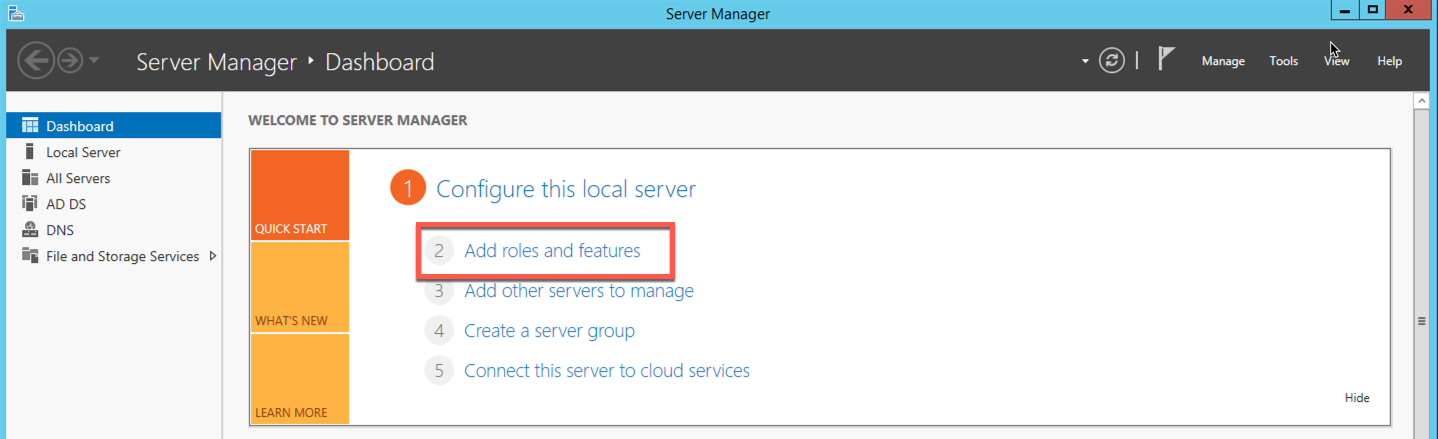
Windows Servers has a Server Manager utility that makes it easy to add services to your server installation. For instance you can add a DHCP Server role or in our case, the CA Server role. By choosing the Server Manager utility (normally pinned to the task bar), you will be presented the following. Choose Add roles and features
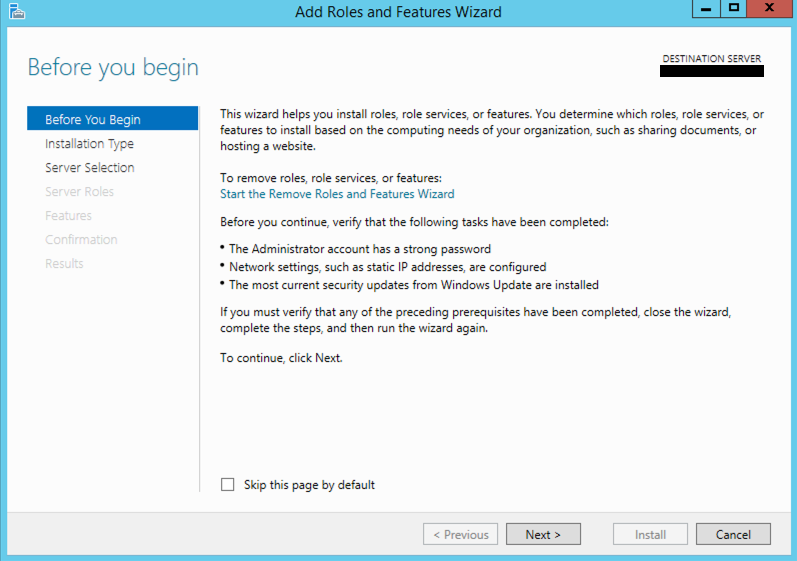
Normally, you will see this page although you can opt to Skip this page by default
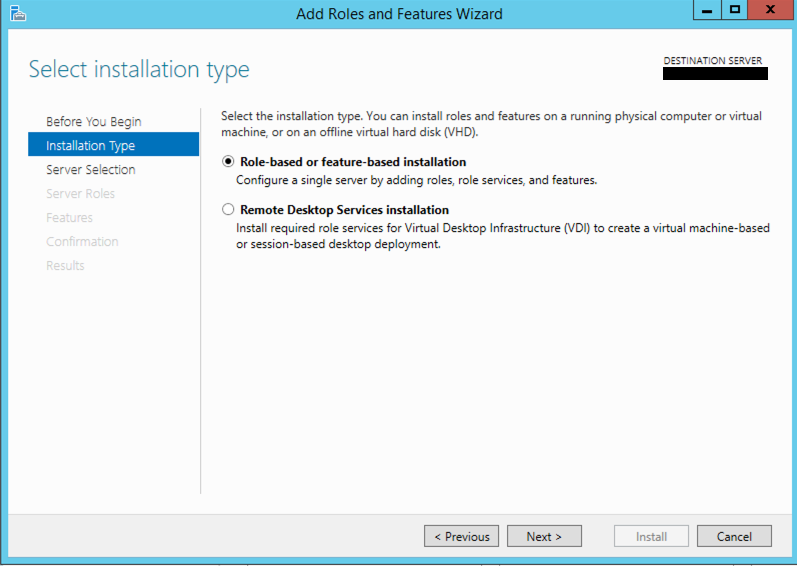
Next we will choose Role-based or feature-based installation
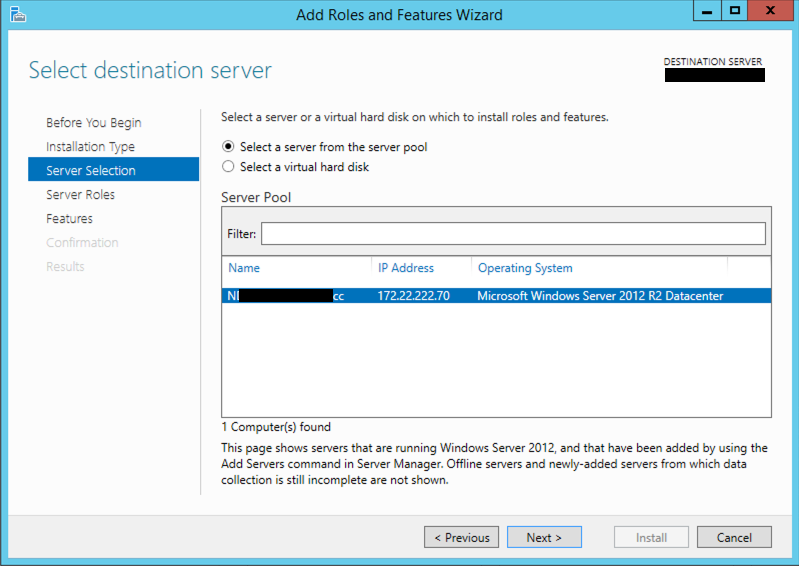
You will then need to select your server and hit Next
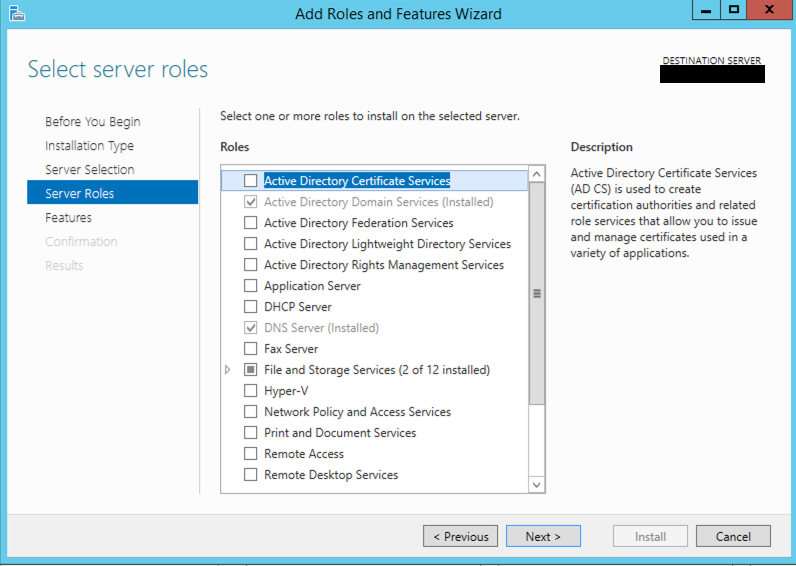
Now choose Active Directory Certificate Services and hit Next
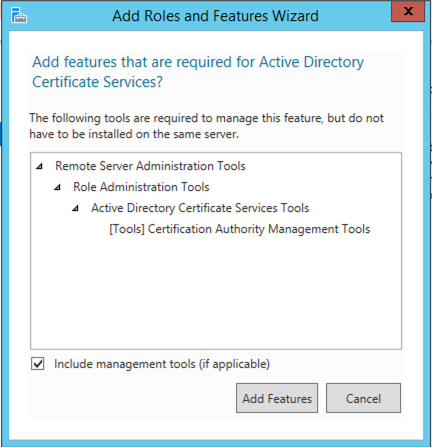
You will now need to click Add Feature at this point. This is informational and should be very simple.
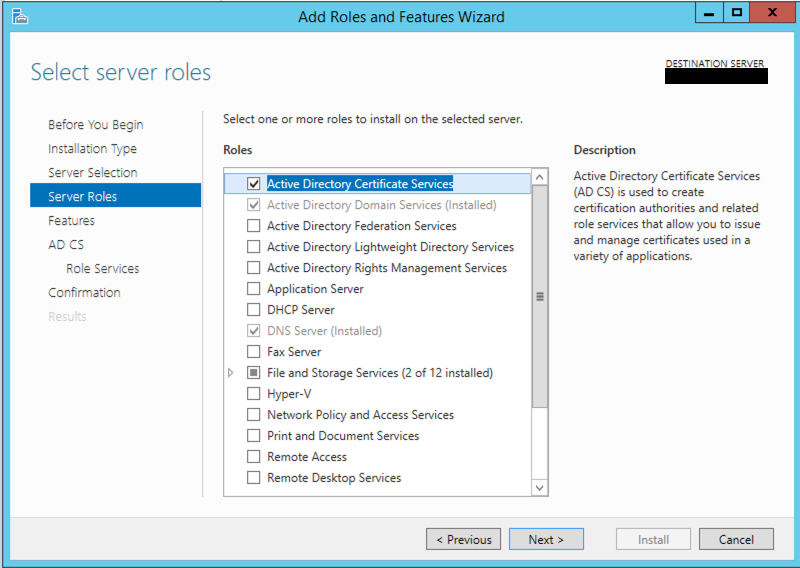
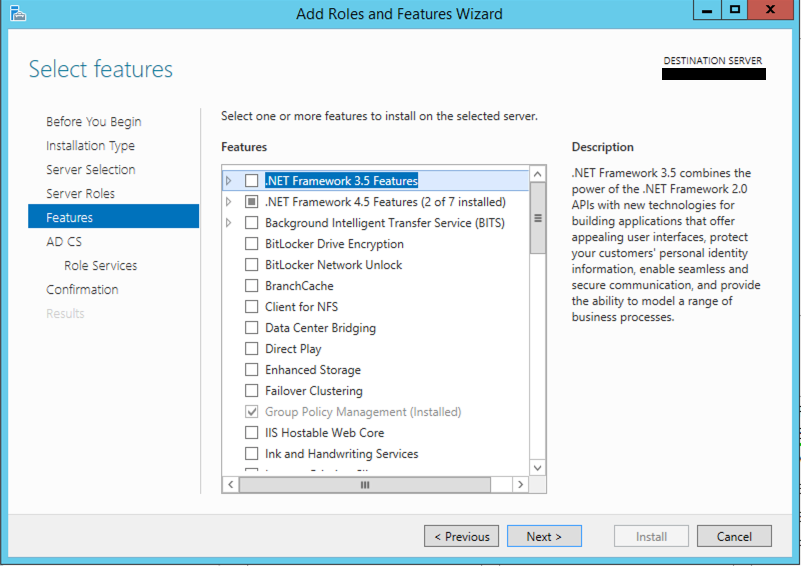
Nothing major below except for the Active Directory Certificate Services being selected. Now hit Next.
In the next screen, just click Next
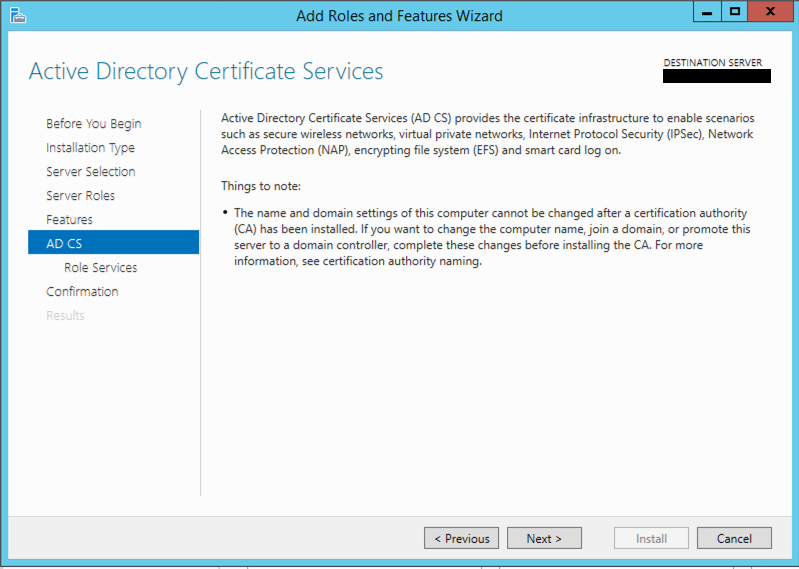
More informational reading. The important thing here is that you cannot change the name of the server once it becomes a CA Server.
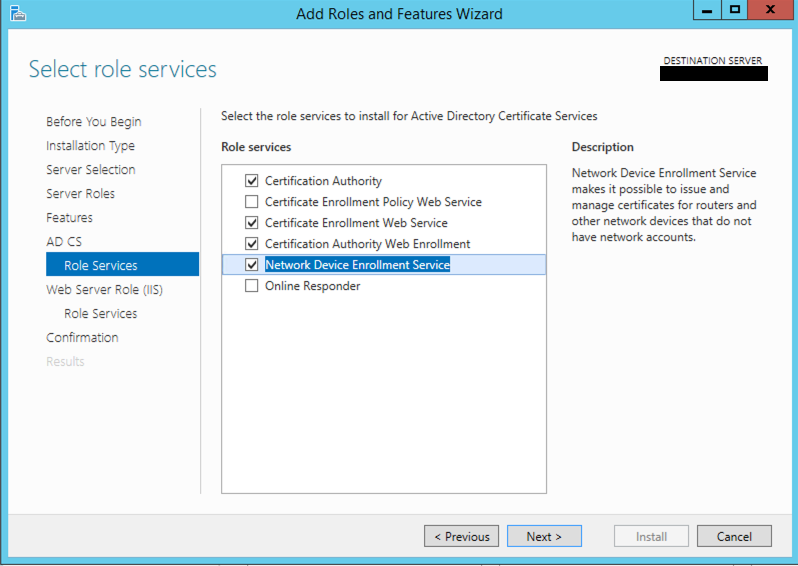
You can now choose what additional services you want to enable. For our purposes, we only require Certificate Authority and Certificate Enrollment Web Service
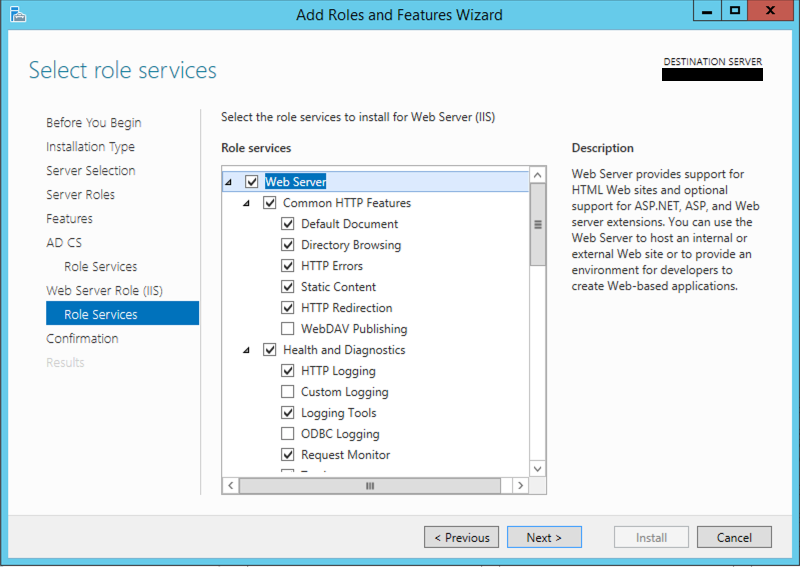
Choose Next
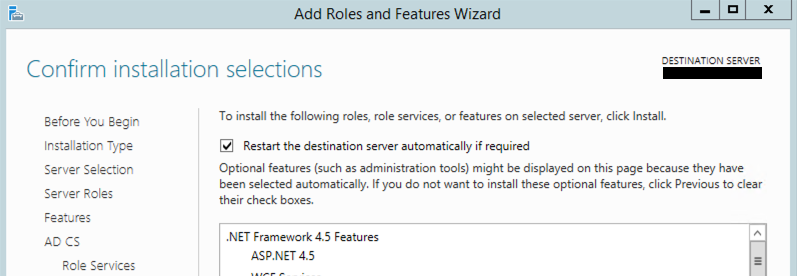
You can choose to Restart the destination server... I always do since my CA is usually not part of the authentication piece of AD (not a DC).
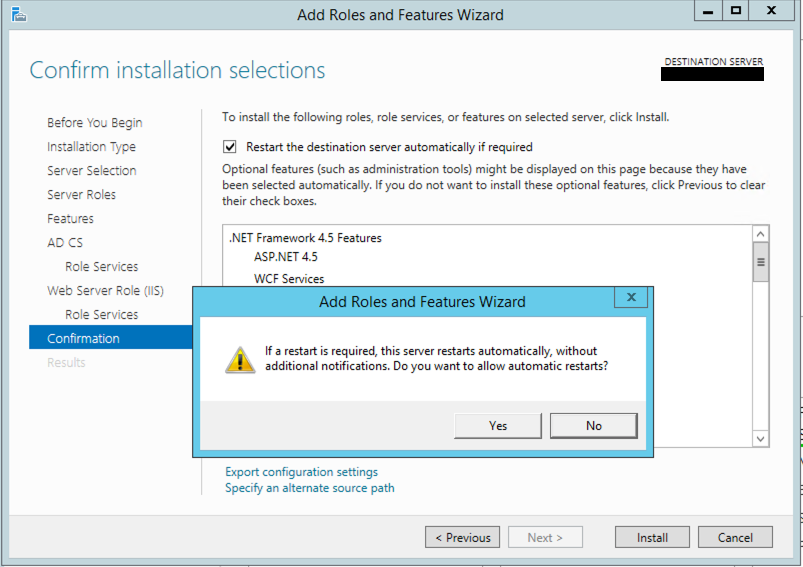
Plenty of validation for this option. You will need to hit Yes
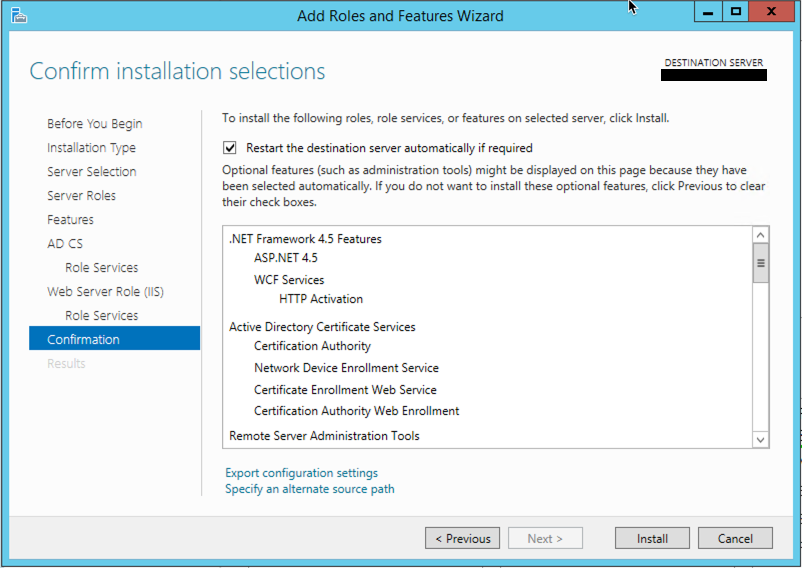
Finally, you can hit install.

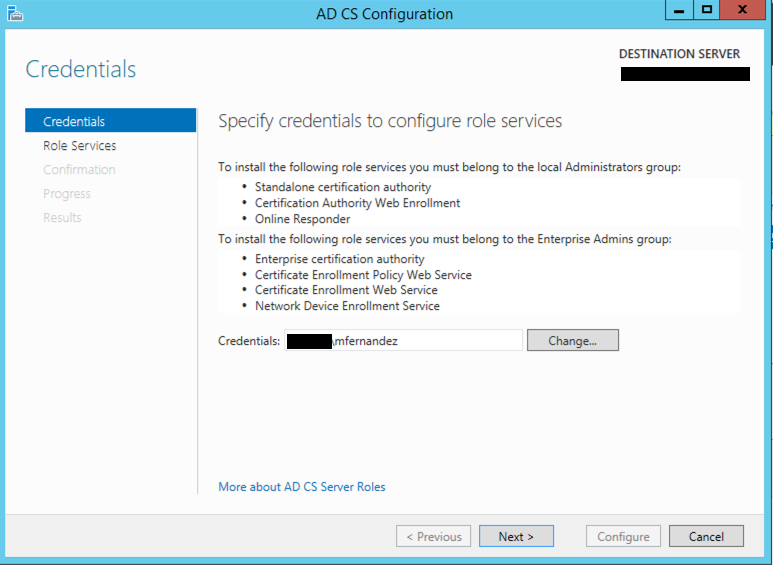
Once you finish the installation, there will be an yellow exclamation on the Server Manager, click it to finish configuring it.
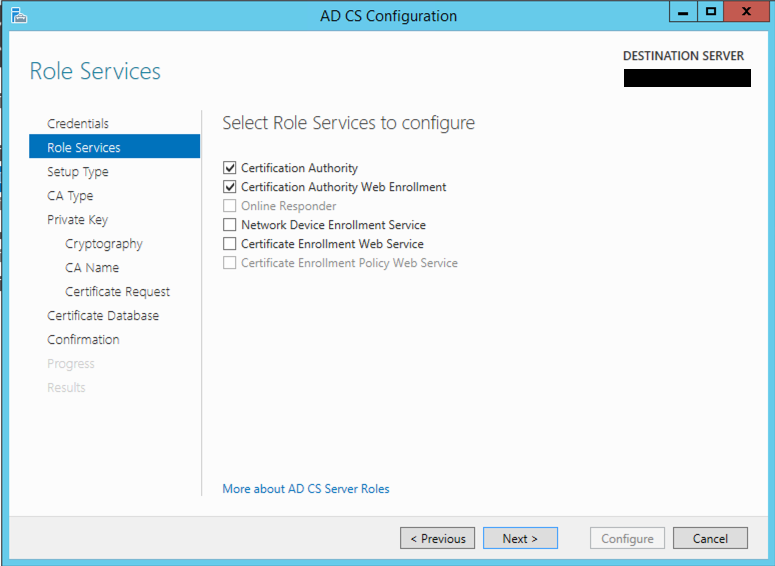
Choose the CA and CA Web Enrollment options and hit Next
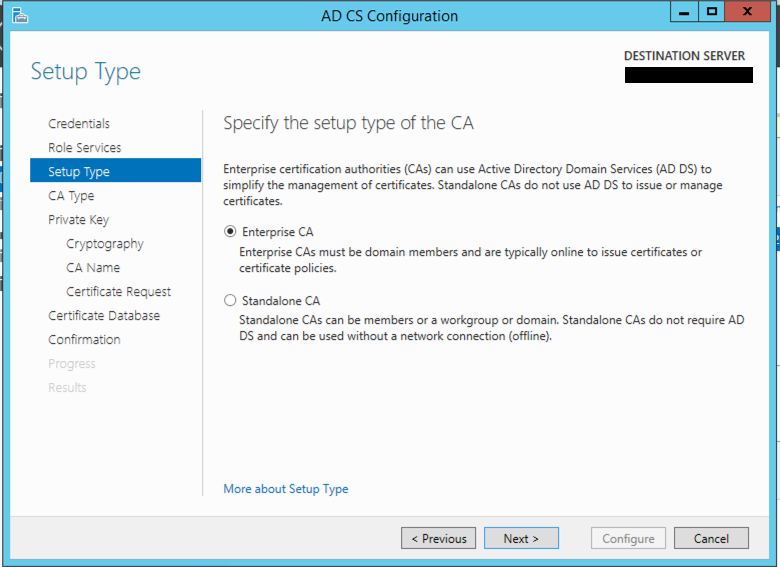
You can choose either Enterprise CA or Standalone CA (I recommend the Enterprise CA) unless you need to. If you need a non-integrated CA, just use FAC or OpenSSL.
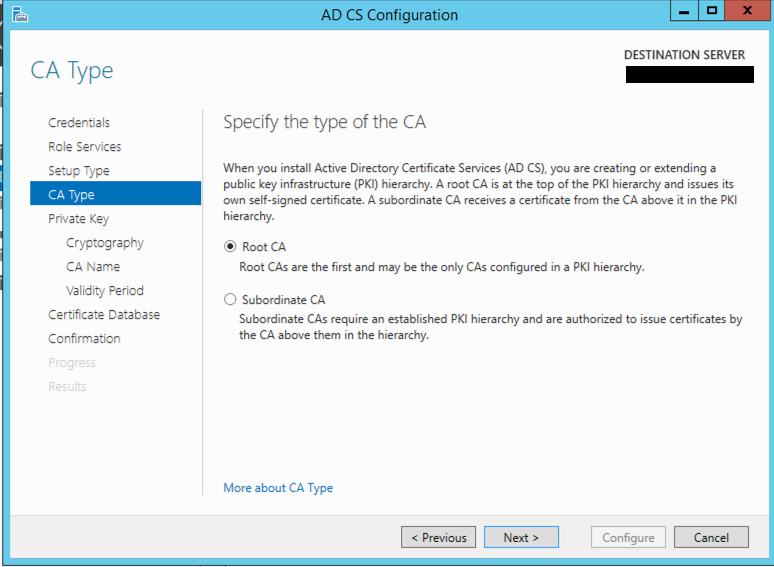
Next you will decide if this will be a Root CA or a Subordinate CA server. Subordinates can sign certificates as long as the Root is trusted. I almost always install a Root CA although there is use cases to do Subordinates, most common is having the Root offsite somewhere and have the sub do all the heavy lifting.
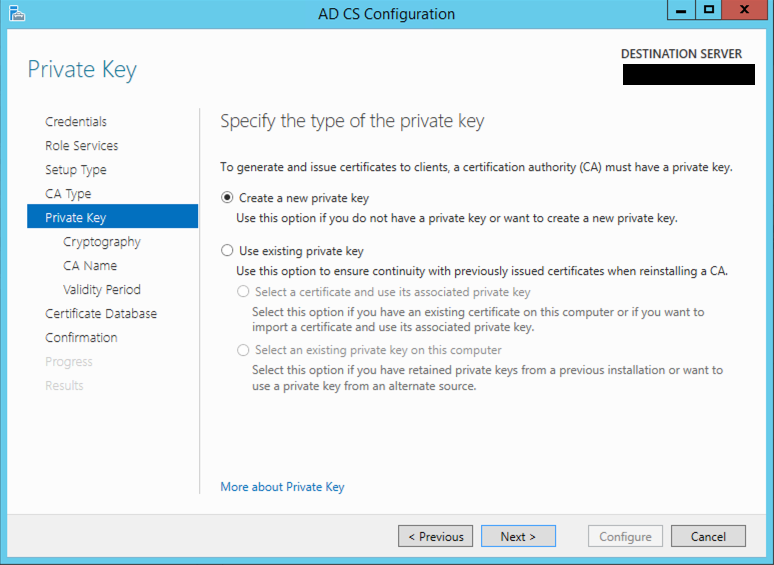
You want to create a new Key Pair and hit next.
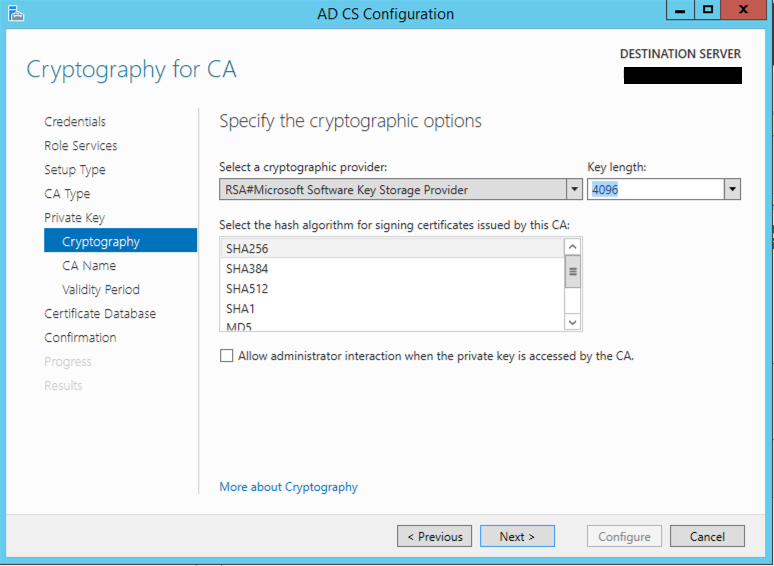
You will want to choose the Key Length and the algorithm to use. Your mileage may vary.
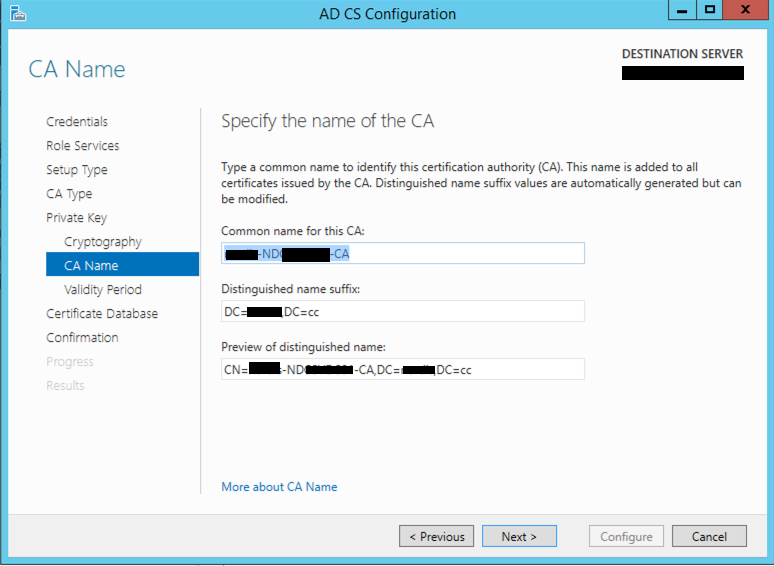
Now you will need to verify some liberties the install took for you. If you are good, hit Next.
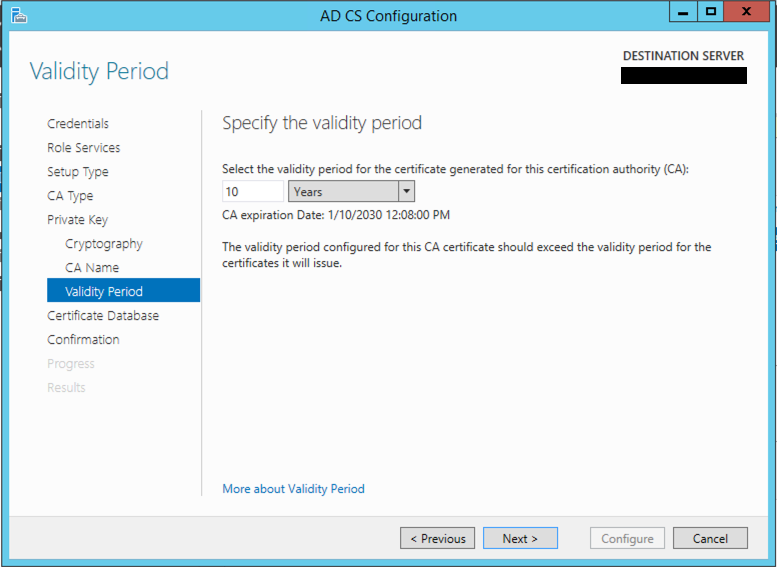
Specify the time before the Root certificate is good for.
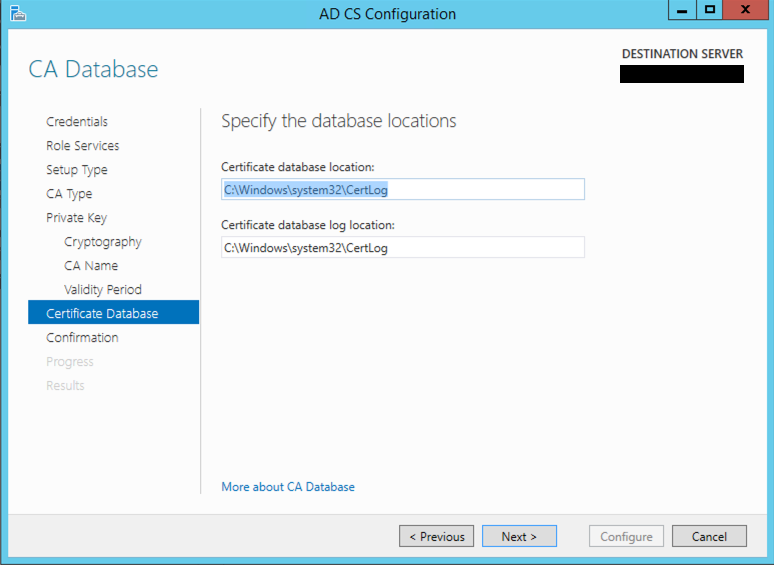
Informational pop up to give you the path of where it is going to store logs.
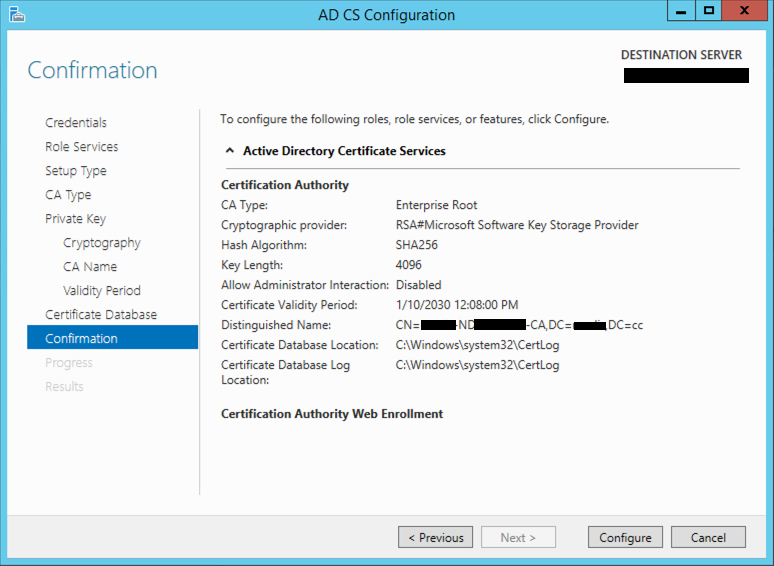
Again, verify. (Measure twice, cut once).
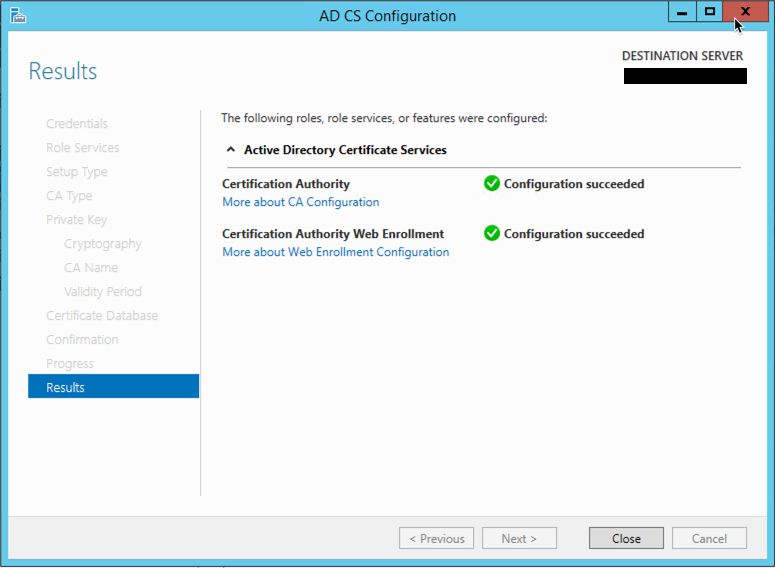
Again, more information telling you the changes have been made.
Recent posts
-

-

DNS is one of those technologies that quietly underpins... Full Story
-

BGP issues on FortiGate firewalls usually trace back to... Full Story
-

Every time your laptop talks to your router, a... Full Story
-

If you've spent any time configuring NAT on a... Full Story
-

If you have spent any time configuring firewall policies... Full Story
-

High availability on FortiGate is one of those features... Full Story
-

If you've configured SD-WAN on a FortiGate, you've almost... Full Story
-

FortiLink is the management protocol that turns a FortiSwitch... Full Story
-

FortiSwitches are pretty rock solid from Mean Time Between... Full Story
-

This is a quicky tip. Have you ever gone... Full Story
-

DNS is one of those quiet pieces of internet... Full Story
-

This article is an updated version of the previous... Full Story
-

You will add ns2 as a secondary (slave) BIND9... Full Story
-

In the process of deploying my lab, I needed... Full Story
-

RFC 8805, used to be known as Self-Correcting IP... Full Story
-

Years back, I wrote an article about certificate pinning. ... Full Story
-

FortiGates have the ability to send alerts to Microsoft... Full Story
-

In this post, I am going to walk through... Full Story
-

Troubleshooting VoIP on a FortiGate can feel like trying... Full Story
-

Prior to FortiOS 7.0, there were three commands to... Full Story
-

In this post, I am going to go over... Full Story
-

What we are going to do: We are going... Full Story
-

Choosing between FGCP (FortiGate Clustering Protocol) and FGSP (FortiGate... Full Story
-

Creating a VLAN on macOS (The "Pro" Move) A... Full Story
-

This blog post explores the logic behind how macOS... Full Story
-

Pretty Fly for a Wi-Fi Tell My Wi-Fi Love... Full Story
-

Part of my daily gig is creating BoMs (Bill-of-Materials)... Full Story
-

ICMP introduces several security risks, but careful filtering, rate... Full Story
-

The command diag debug application dhcps -1 enables full... Full Story
-

In the world of FortiOS, execute tac report is... Full Story
-

LLDP; What is it The Link Layer Discovery Protocol... Full Story
-

What it actually does When you run diagnose fdsm... Full Story
-

Monkey Bites are bite-sized, high-impact security insights designed for... Full Story
-

I have run macOS in macOS with Parallels but... Full Story
-

Don't be confused with my other FortiNAC posts where... Full Story
-

This is the third session in a multi-part article... Full Story
-

Today I was configuring key-based authentication on a FortiGate... Full Story
-

Netcat, often called the "Swiss Army knife" of networking,... Full Story
-

At its core, IEEE 802.1X is a network layer... Full Story
-

In case you did not see the previous FortiNAC... Full Story
-

This is our 5th session where we are going... Full Story
-

Now that we have Wireshark installed and somewhat configured,... Full Story
-

The Philosophy of Packet Analysis Troubleshooting isn't about looking... Full Story
-

InfoSecMonkey Threat Response October 24, 2026 | No fluff.... Full Story
-

InfoSecMonkey Threat Response October 24, 2026 | No fluff.... Full Story
-

Plus what you actually get with FortiCare Essential, Premium... Full Story