
If you've spent any time configuring user authentication on... Full Story
By Manny Fernandez
January 1, 2020

Encrypting a USB Thumb-Drive on macOS from CLI and GUI
There are a couple of ways to encrypt drives and volumes on macOS X. I recommend that if you are going to use a thumb-drive for your own use, that you use encryption to protect the contents. If this is a thumb-drive that will be shared (not recommended) you CAN create an encrypted volume within the drive and have half of it encrypted and the other not.
Command Line Option
I love the CLI so you will see a lot of macOS articles here on the CLI. First thing to do is to run a utulity that will tell you which drive you are working with. In my example I have a 16GB USB Thumb-drive that I will use for the demonstration.
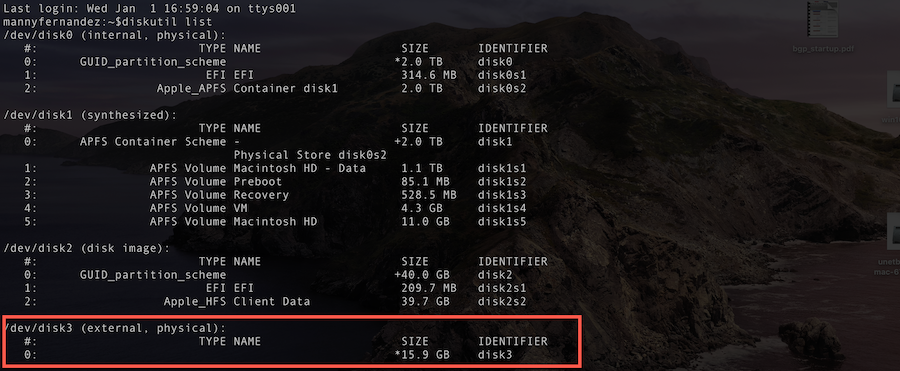
As you can see, my USB is in /dev/disk3
Encrypting the Volume
Now we will initiate the encryption.
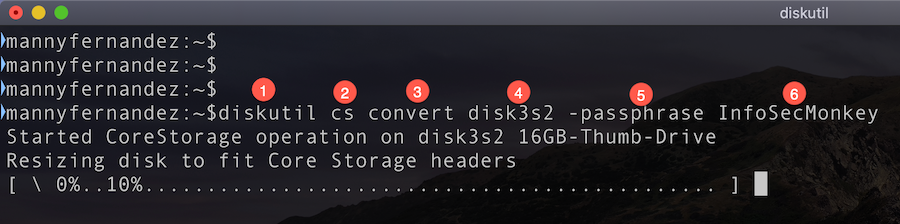
- diskutil – This is the macOS utility that has multiple uses all around the drive, volumes, and file systems.
- cs – CoreStorage (See below)
- convert – Convert a regular Journaled HFS+ or Case-sensitive Journaled HFS+ volume (must be on a partition and within a GPT partitioning scheme) into a CoreStorage logical volume
- disk3s2 – Is the identifier for the volume
- -passphrase – tells the diskutil that we want to add a password
- the actual password to be used
Core Storage – Layered between the whole-disk partition scheme and the file system used for a specific partition is a new logical volume format known as Core Storage, introduced in OS X Lion. Core Storage makes it easy to dynamically allocate partitions while providing full compatibility with existing filesystems. In particular, Core Storage allows in-place transformations such as backgrounding the full-disk encryption used by File Vault 2.
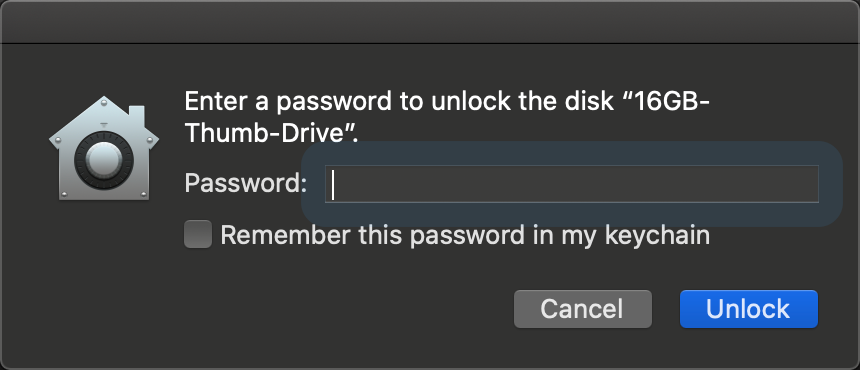
When this process in complete, and you remount the drive, you will be prompted.
GUI Version
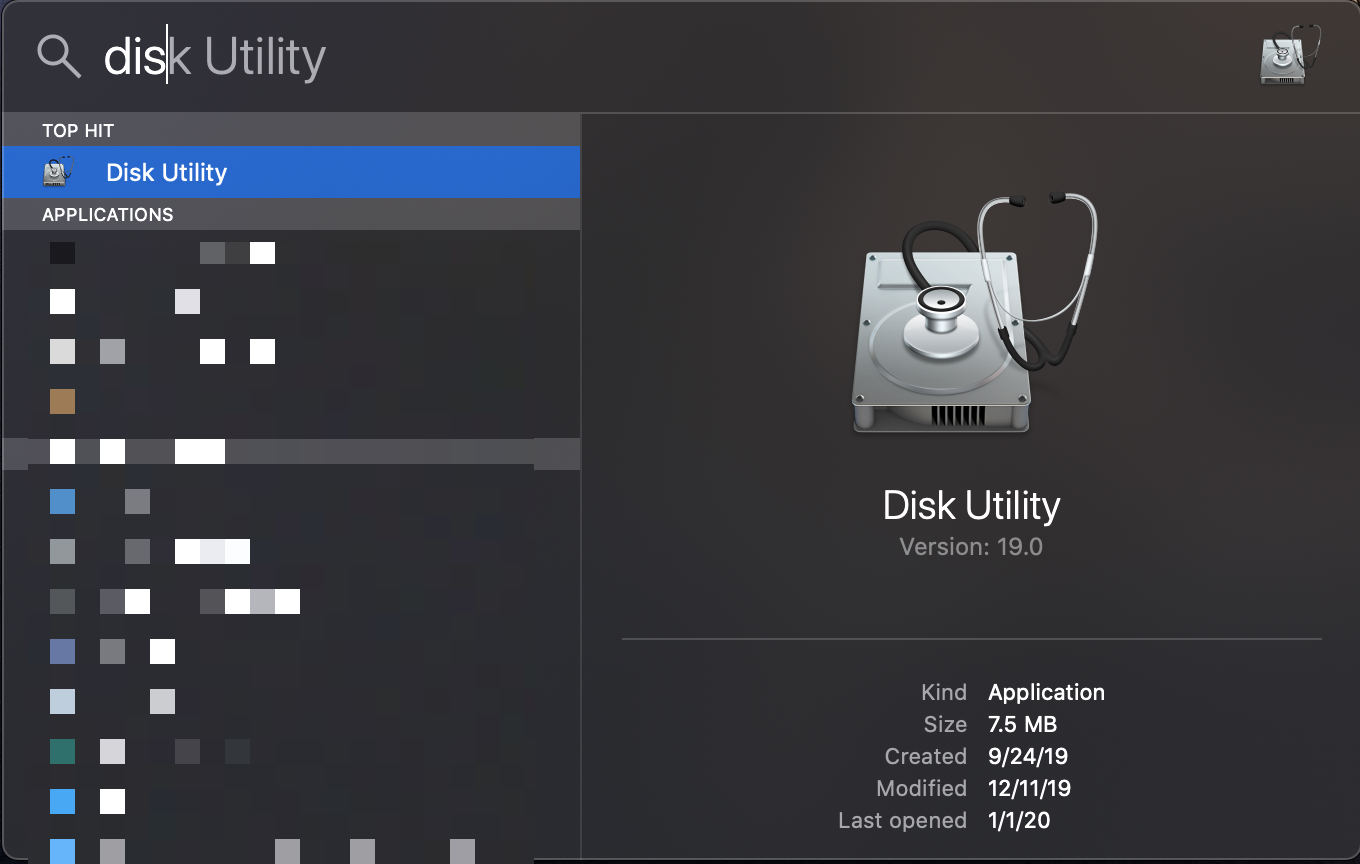
I must admit, this method is cleaner. First thing is hit the ⌘ and space bar

You should see your SpotLight Search dialog come up.
Start typing disk and you should see Disk Utility show up
Once inside the utility, choose your thumb-drive and choose Erase
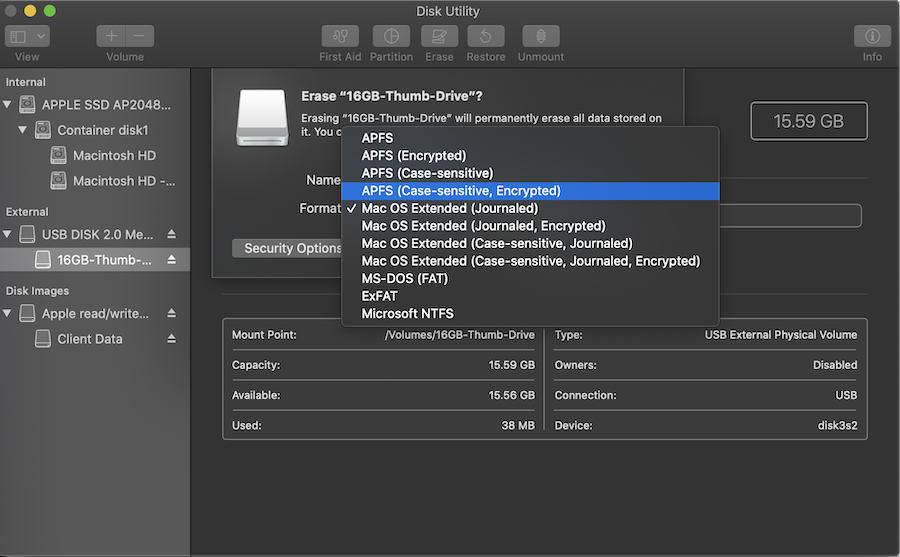
Choose a file system that contains Encrypted in the name.
Once you select one, you will get prompted for the password
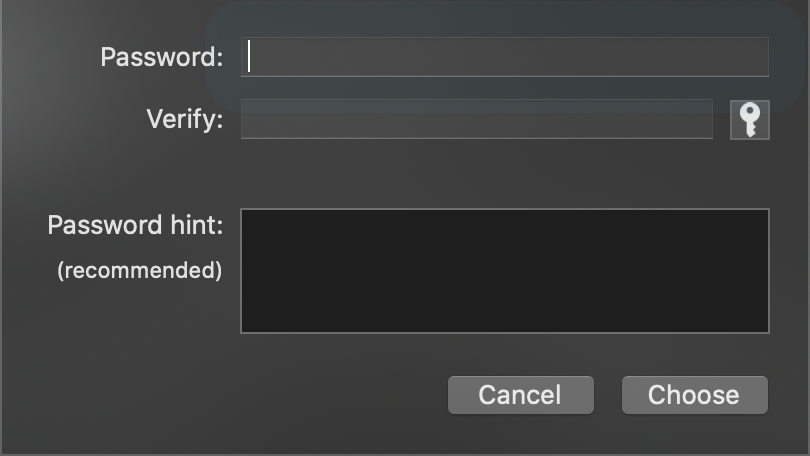
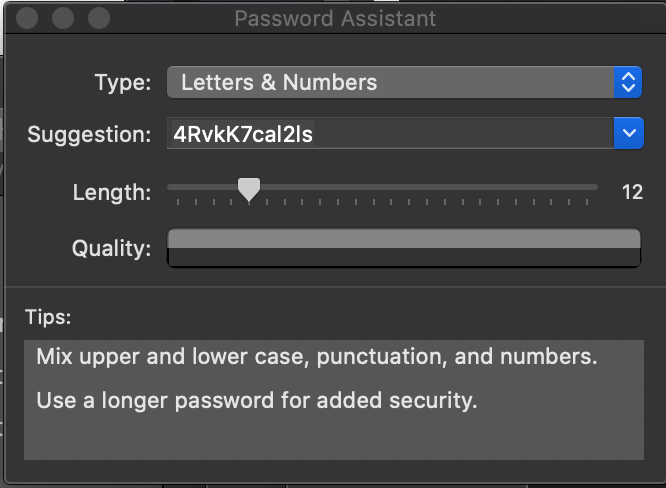
You CAN choose the key icon next to the Verify field to have it generate a random password. Your mileage may vary.
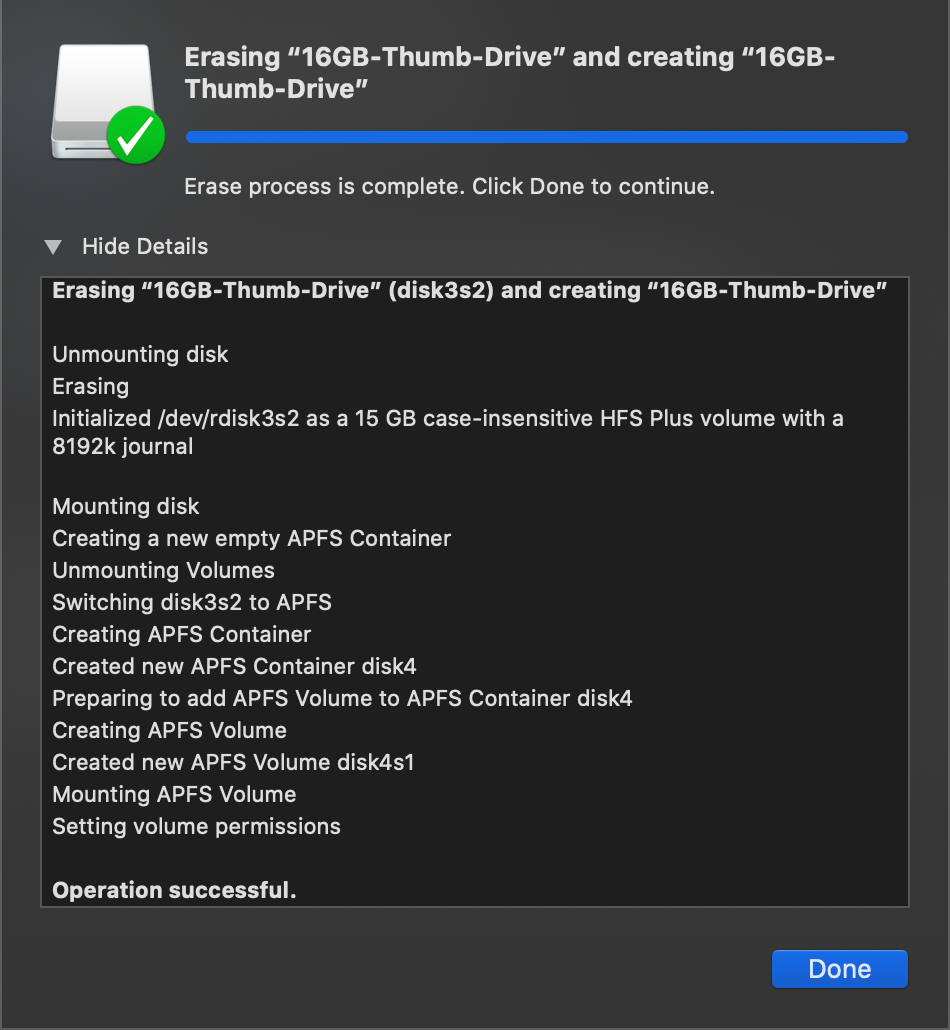
Once the operation has completed, you should get a screen similar to the one below.
Hope this helps.
Recent posts
-

-

DNS is one of those technologies that quietly underpins... Full Story
-

BGP issues on FortiGate firewalls usually trace back to... Full Story
-

Every time your laptop talks to your router, a... Full Story
-

If you've spent any time configuring NAT on a... Full Story
-

If you have spent any time configuring firewall policies... Full Story
-

High availability on FortiGate is one of those features... Full Story
-

If you've configured SD-WAN on a FortiGate, you've almost... Full Story
-

FortiLink is the management protocol that turns a FortiSwitch... Full Story
-

FortiSwitches are pretty rock solid from Mean Time Between... Full Story
-

This is a quicky tip. Have you ever gone... Full Story
-

DNS is one of those quiet pieces of internet... Full Story
-

This article is an updated version of the previous... Full Story
-

You will add ns2 as a secondary (slave) BIND9... Full Story
-

In the process of deploying my lab, I needed... Full Story
-

RFC 8805, used to be known as Self-Correcting IP... Full Story
-

Years back, I wrote an article about certificate pinning. ... Full Story
-

FortiGates have the ability to send alerts to Microsoft... Full Story
-

In this post, I am going to walk through... Full Story
-

Troubleshooting VoIP on a FortiGate can feel like trying... Full Story
-

Prior to FortiOS 7.0, there were three commands to... Full Story
-

In this post, I am going to go over... Full Story
-

What we are going to do: We are going... Full Story
-

Choosing between FGCP (FortiGate Clustering Protocol) and FGSP (FortiGate... Full Story
-

Creating a VLAN on macOS (The "Pro" Move) A... Full Story
-

This blog post explores the logic behind how macOS... Full Story
-

Pretty Fly for a Wi-Fi Tell My Wi-Fi Love... Full Story
-

Part of my daily gig is creating BoMs (Bill-of-Materials)... Full Story
-

ICMP introduces several security risks, but careful filtering, rate... Full Story
-

The command diag debug application dhcps -1 enables full... Full Story
-

In the world of FortiOS, execute tac report is... Full Story
-

LLDP; What is it The Link Layer Discovery Protocol... Full Story
-

What it actually does When you run diagnose fdsm... Full Story
-

Monkey Bites are bite-sized, high-impact security insights designed for... Full Story
-

I have run macOS in macOS with Parallels but... Full Story
-

Don't be confused with my other FortiNAC posts where... Full Story
-

This is the third session in a multi-part article... Full Story
-

Today I was configuring key-based authentication on a FortiGate... Full Story
-

Netcat, often called the "Swiss Army knife" of networking,... Full Story
-

At its core, IEEE 802.1X is a network layer... Full Story
-

In case you did not see the previous FortiNAC... Full Story
-

This is our 5th session where we are going... Full Story
-

Now that we have Wireshark installed and somewhat configured,... Full Story
-

The Philosophy of Packet Analysis Troubleshooting isn't about looking... Full Story
-

InfoSecMonkey Threat Response October 24, 2026 | No fluff.... Full Story
-

InfoSecMonkey Threat Response October 24, 2026 | No fluff.... Full Story
-

Plus what you actually get with FortiCare Essential, Premium... Full Story